In short
The batter for these cottage cheese pancakes is blended until completely smooth, then rested for 5 minutes so the oats thicken it. The pancakes cook in 1/4-cup portions in a skillet over medium-low heat, with each batch flipped once and cooked to 160°F. The pancakes are served 3 per plate with maple yogurt and blueberries, and leftovers are stored plain with toppings kept separate.
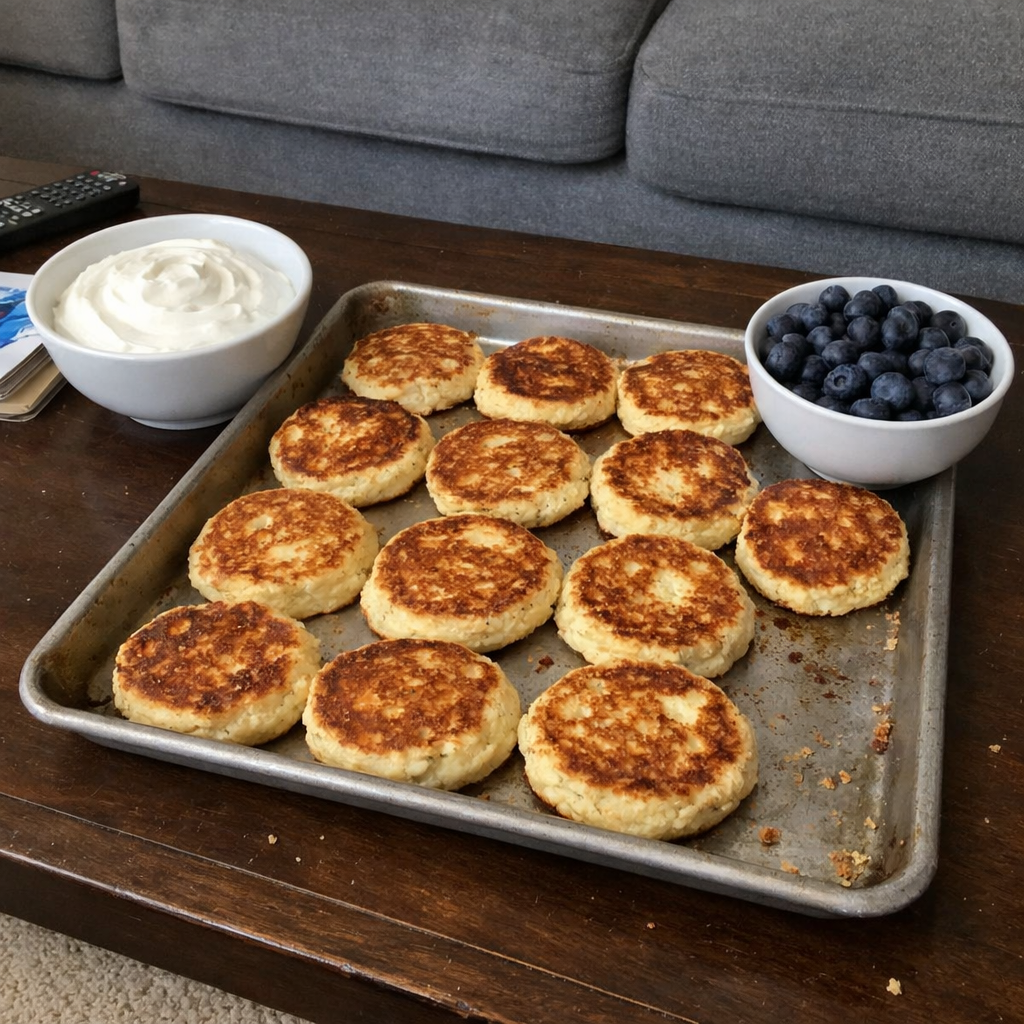
Cottage cheese pancakes turn out tender, softly sweet, and lightly cinnamon-scented, with a smooth batter and a golden exterior. You cook them in batches, keep them warm in a 200°F oven, and serve them with maple yogurt and blueberries.
Smooth Batter
Blend the 16 oz 2% lowfat cottage cheese, 4 large eggs, 1 cup old-fashioned rolled oats, 1 tbsp of the maple syrup, 2 tsp baking powder, 2 tsp vanilla extract, 1/2 tsp ground cinnamon, and 1/4 tsp salt for about 1 minute, scraping the sides once. The goal is completely smooth, with no curds or flakes of oats left.
Let the batter stand for 5 minutes so the oats can thicken it. That short rest helps the batter hold its shape in the skillet instead of spreading thin. If you want to swap, quick oats work in the same 1 cup, and small-curd, large-curd, or full-fat cottage cheese all blend the same way. Blended cottage cheese also makes the sauce in our chicken alfredo with cottage cheese sauce.
Cook Gently
Heat a 12-inch nonstick skillet over medium-low heat for 2 minutes, then add 1 tsp of the butter and swirl to coat. Use 1/4 cup batter for each pancake, 4 per batch, and keep them spaced apart. Keep the heat at medium-low: the batter is thick and moist, and the maple syrup and dairy brown fast.
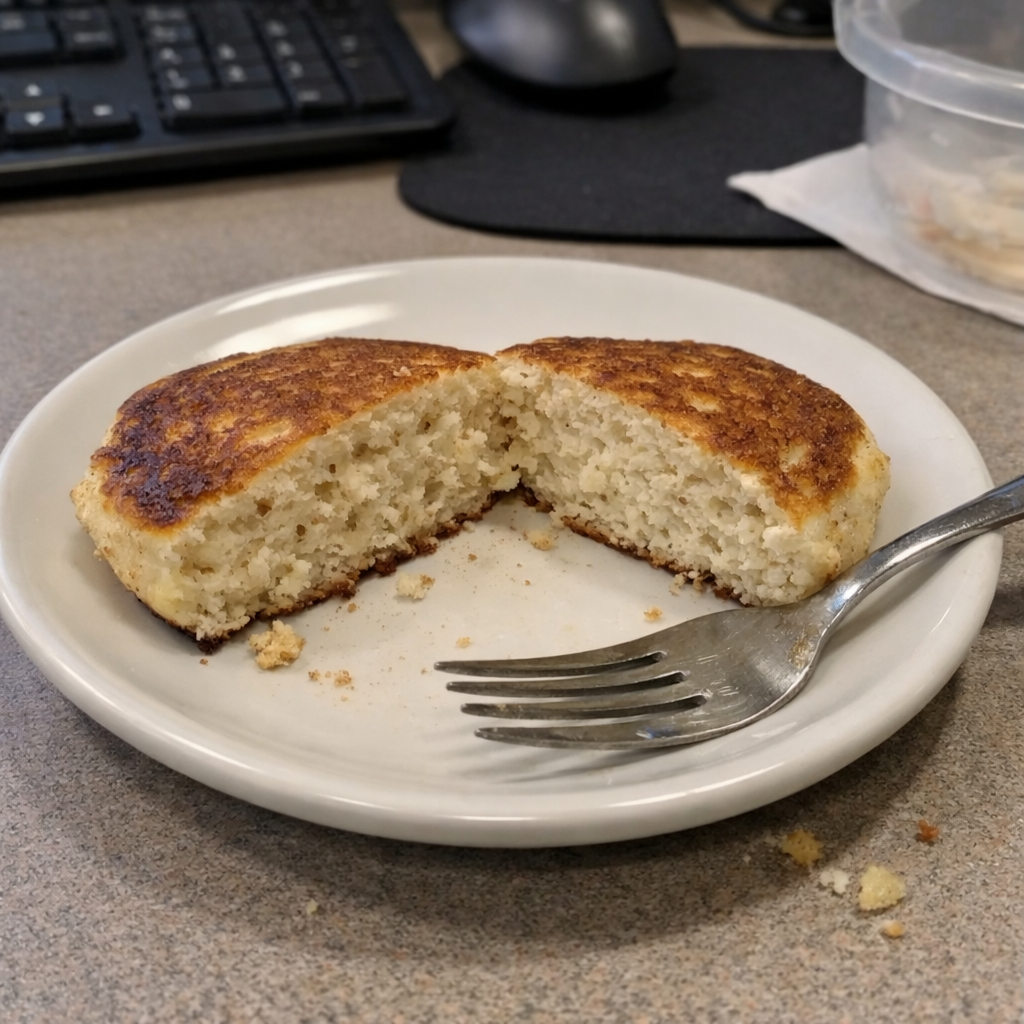
Shape each mound to about 3 1/2 inches across with the back of the measuring cup. Cook 3 to 4 minutes until the edges look dry and set and the underside is golden brown. Slide the wide, thin spatula all the way under before flipping, then cook 2 to 3 minutes more until the second side is golden brown.
Check Doneness
Use the instant-read thermometer as the final cue, because the inside stays soft and moist even when it is fully cooked. Push the thermometer into the center of a pancake from the side. Check that one pancake in each batch reads 160°F before you move the batch off the skillet, and that temperature is the safe minimum for the 4 eggs in the batter.
If a batch browns before the center reaches 160°F, lower the heat and keep cooking it, flipping once more if needed. Start the next batch a little lower. That adjustment keeps the outside from turning too dark while the middle of this thick batter finishes.
Warm and Top
Heat the oven to 200°F before you begin so finished pancakes can stay warm while the remaining batches cook. Move the pancakes to a rimmed baking sheet in a single layer; stacked pancakes trap steam and turn soft. The recipe makes 3 batches total, and the 200°F oven keeps the first batches warm while the rest cook so everyone can eat at once.
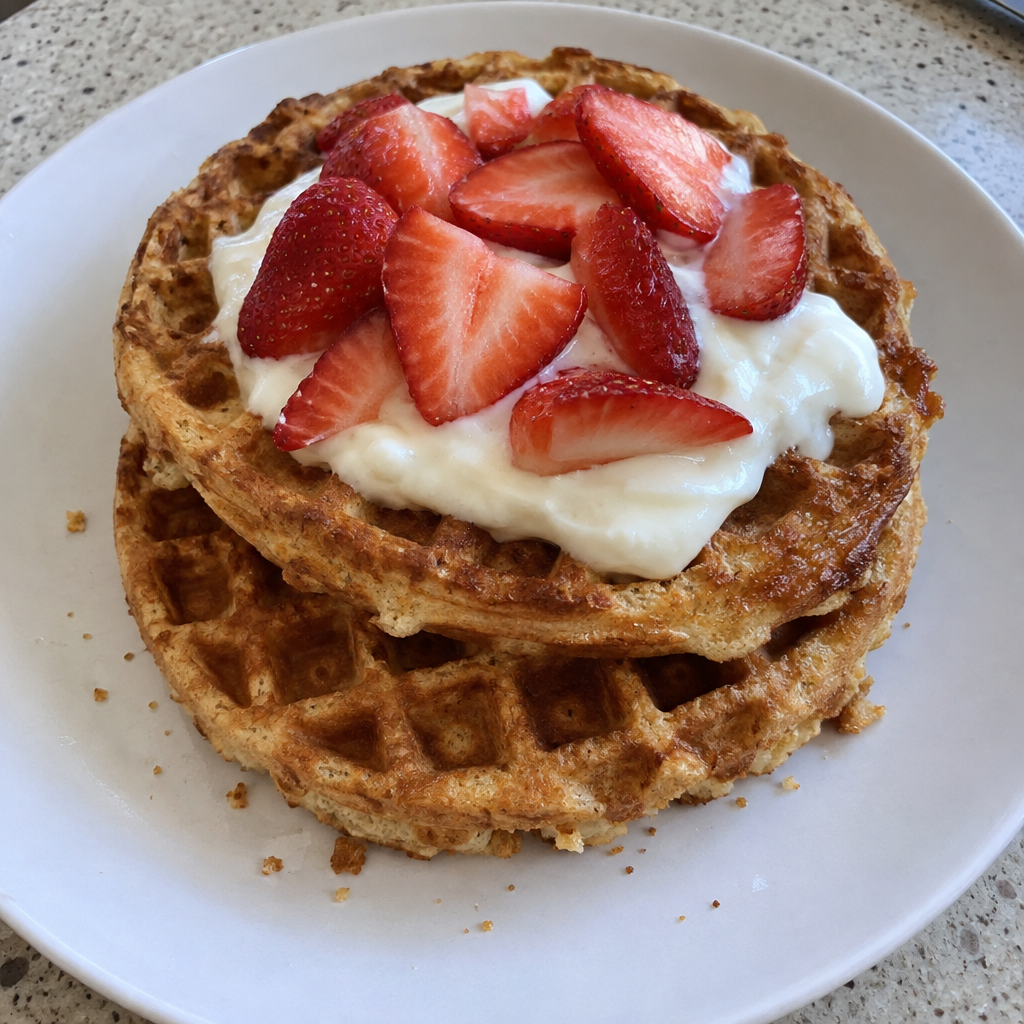
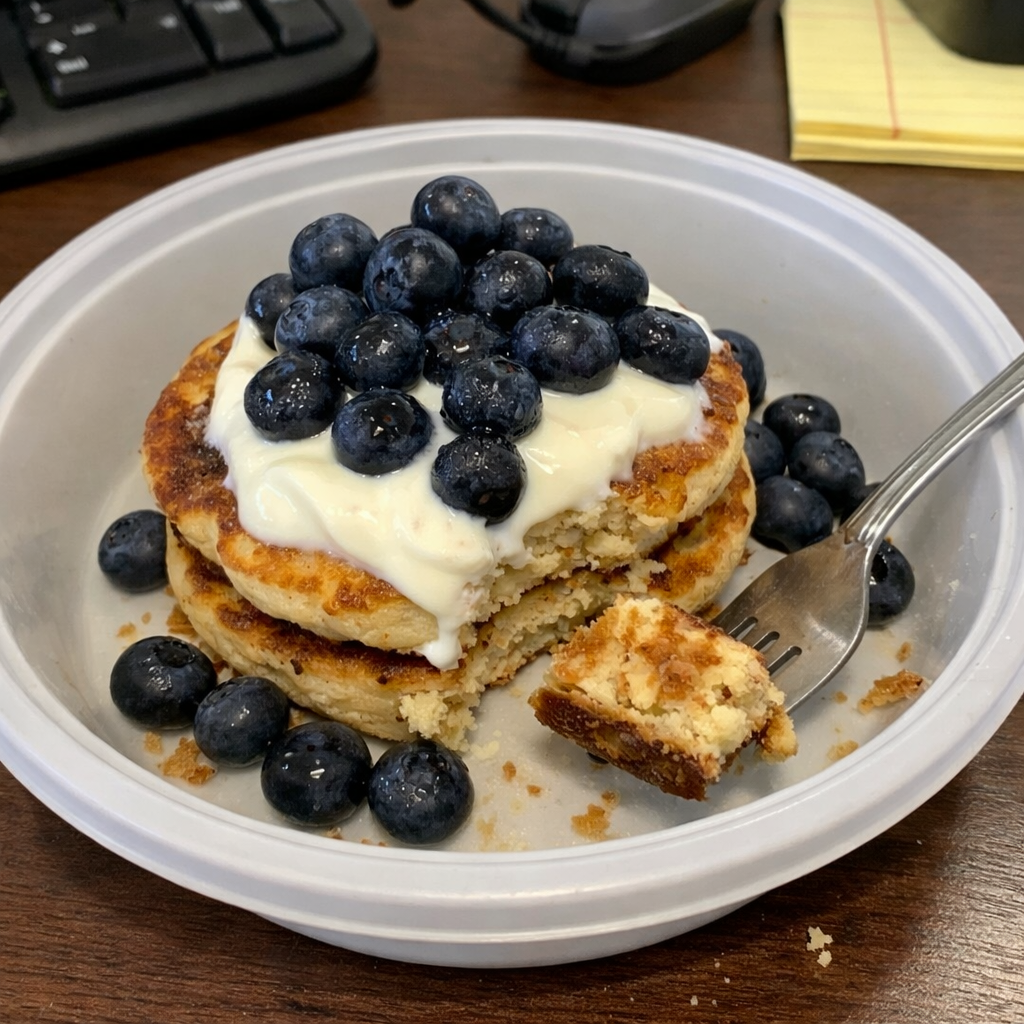
While the batter rests, stir the 16 oz plain nonfat Greek yogurt with the remaining 2 tbsp maple syrup until smooth, then refrigerate it until serving. Our Greek yogurt protein pancakes whisk the same plain nonfat Greek yogurt into the batter. Plate 3 pancakes per serving, top each portion with a quarter of the maple yogurt and 1/2 cup of the blueberries, and keep the yogurt and berries separate until then.
Store and Reheat
Refrigerate any pancakes not being served in a covered container within 2 hours of cooking, and store them plain. Keep the maple yogurt and blueberries separate, so the pancakes do not turn soggy. Fresh blueberries also go into our high-protein overnight oats. If you want to freeze them, lay them in a single layer on the rimmed baking sheet until firm, then transfer them to a freezer bag and press out the air.
To reheat chilled pancakes, place them in a single layer on a microwave-safe plate, cover with a damp paper towel, and microwave in 30-second bursts, turning the plate between bursts, until hot. Let them stand for 1 minute, then check that they read 165°F in a few places before adding the toppings. Frozen pancakes can be reheated without thawing.
Frequently Asked Questions
Can I make the batter without a blender?
Yes, with a food processor: process the oats on their own until fine, then add the rest of the batter ingredients and process until smooth, scraping down the sides once or twice. Mashing or whisking by hand will not grind the oats or break down the curds, so the batter stays lumpy.
Can I halve or double the recipe?
Yes. To serve 2, halve everything and cook the 6 pancakes in 2 batches, scraping the blender down more often, since less batter sits low in the jar. For 8, blend two single batches so the blender is not overfilled, the second when the first is almost gone; cook 6 batches of 4, keeping them warm in the oven on two sheets.
Can I use egg whites instead of whole eggs?
Yes. Use 8 large egg whites, a little over 1 cup, in place of the 4 whole eggs, and still cook each batch until a pancake reads 160°F, the safe minimum internal temperature for eggs. The batter is a little thinner and the pancakes a little less rich and tender; the nutrition numbers are for whole eggs.
Can I make the pancakes less sweet?
Yes. Leave the 1 tbsp of maple syrup out of the batter and stir only 1 tbsp into the yogurt; the vanilla, cinnamon and berries still flavor each plate. Without the syrup the pancakes may brown a little more slowly, so cook each batch by the 160°F reading as usual.
Can I make the batter the night before?
It is best cooked soon after its 5-minute rest. The ground oats keep soaking up liquid as the batter stands, so by morning it is much thicker and harder to spread into rounds. To save time, put the oats, baking powder, cinnamon and salt in the blender jar the night before, then add the rest of the batter ingredients and blend just before cooking.