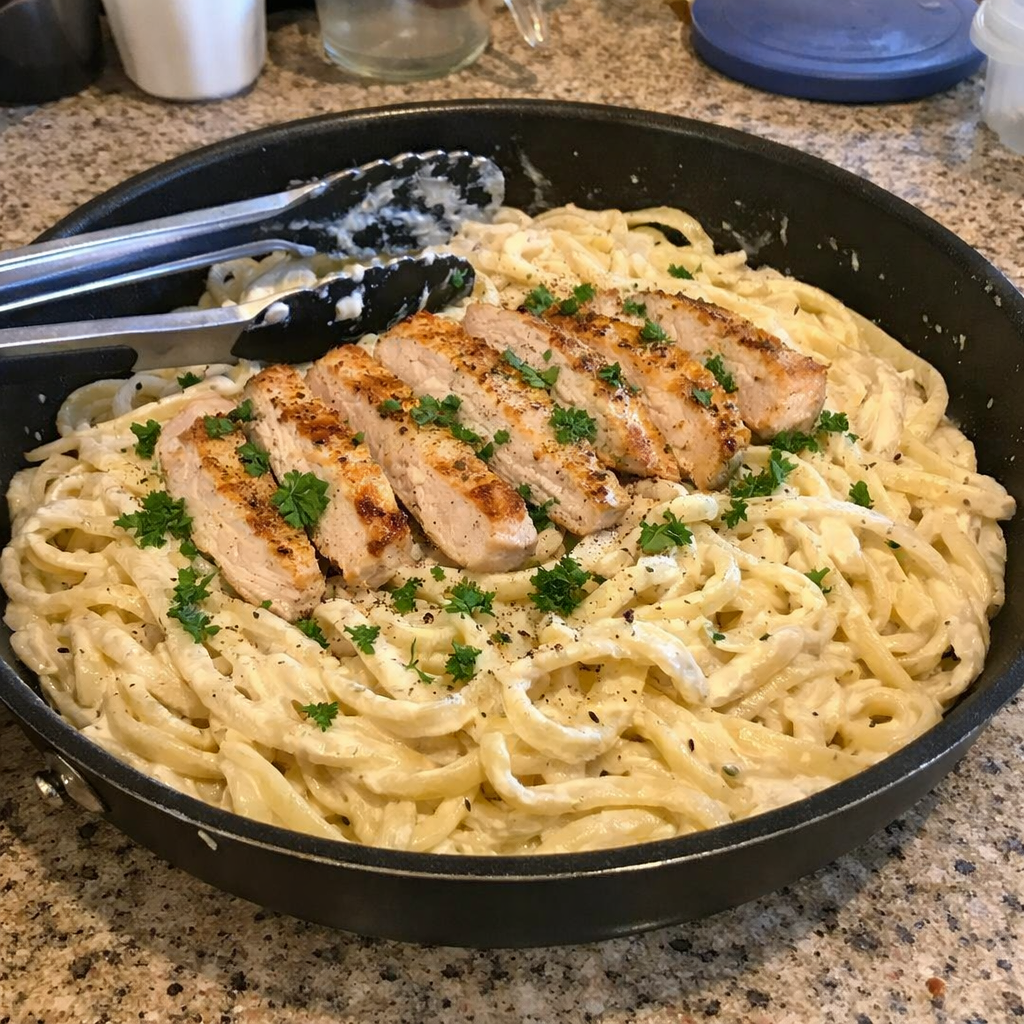
In short
Chicken Alfredo with cottage cheese sauce uses 1 1/4 lb boneless skinless chicken breasts by raw weight, 12 oz dry fettuccine made without egg, and a blender-made sauce from 16 oz 2% lowfat cottage cheese, Parmesan, and pasta water. The chicken is browned in a skillet, the pasta cooks in salted water, and the sauce is warmed gently so it stays smooth. Slice the chicken across the grain, top the pasta, and finish with parsley.
This cottage cheese Alfredo is a creamy, savory pasta with golden chicken, tender fettuccine, and a sauce that turns smooth when blended well. The cottage cheese and Parmesan blend into a rich finish, and dinner takes about 15 minutes to prep and about 30 minutes to cook.
Sauce Base
Start by bringing 4 quarts of water with 2 1/2 tsp of the salt to a boil in a large pot. At the same time, put the 16 oz of 2% lowfat cottage cheese and the 3 oz of finely grated Parmesan into a blender and set it aside. Our cottage cheese pizza bowl uses the same cottage cheese. Grating the Parmesan finely helps it disappear into the sauce instead of staying gritty.
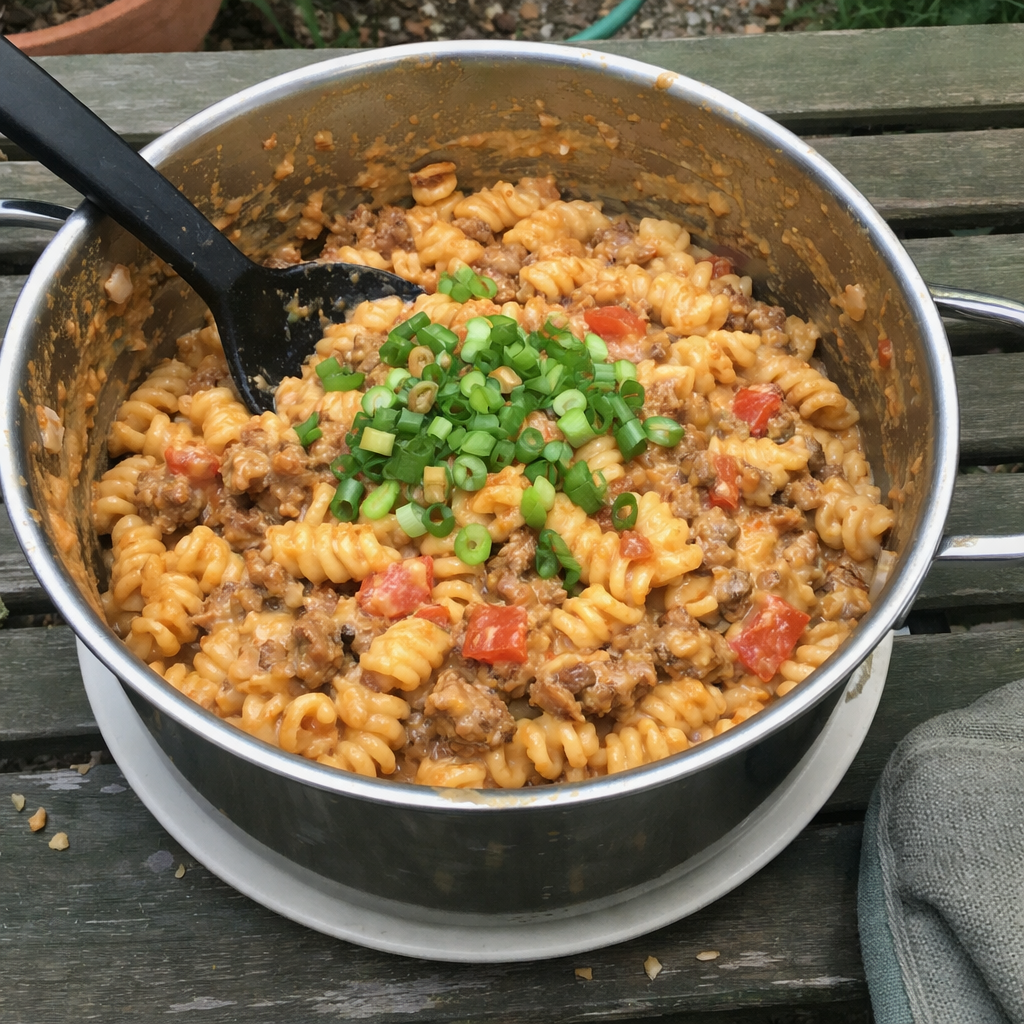
Scoop out the pasta water before you drain; it carries starch from the noodles. Our taco pasta with cottage cheese sauce uses it too. That starch helps the sauce cling to the fettuccine, and the hot water thins the blended cheese into something pourable. Save the full 1 cup in two additions: 1/2 cup goes into the blender first, and the remaining 1/2 cup stays ready for the final toss.
Chicken Prep
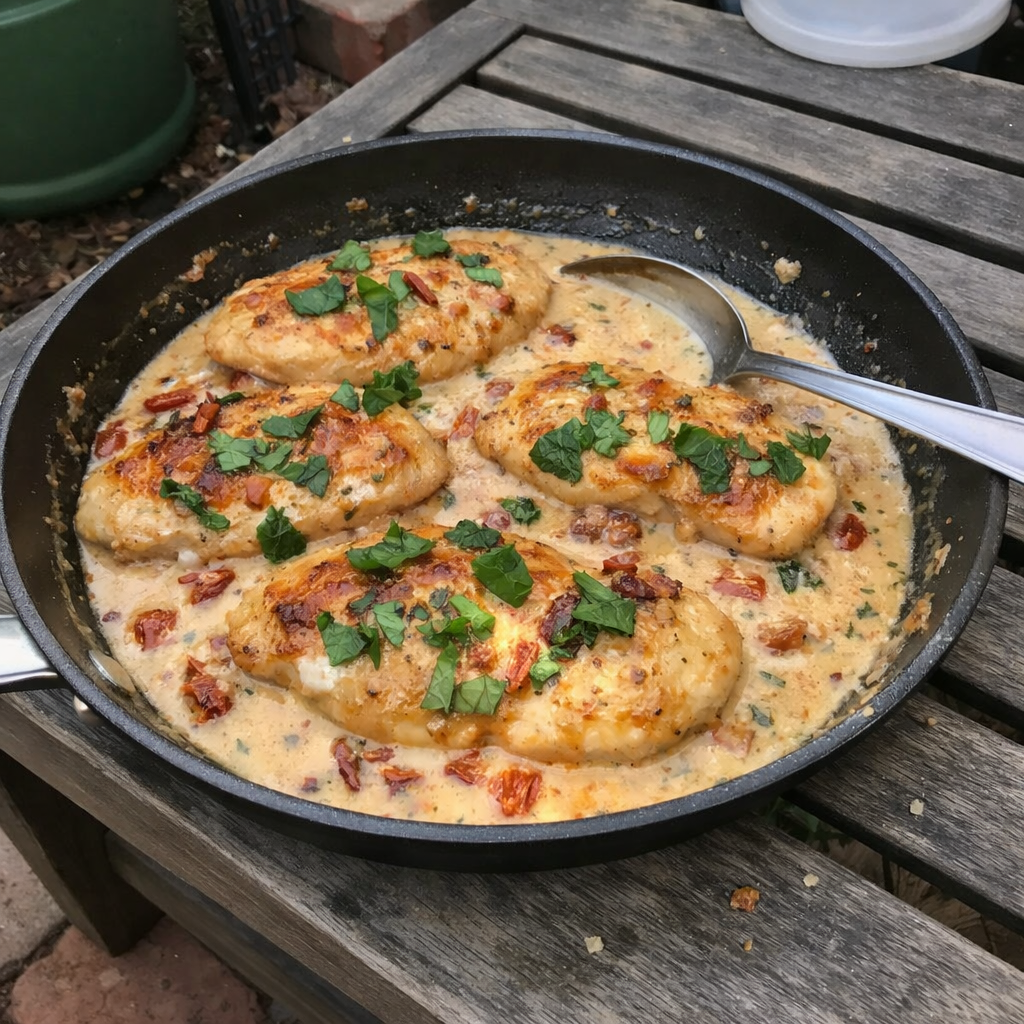
Use 1 1/4 lb of boneless skinless chicken breasts by raw weight, and if any breast is more than 3/4 inch thick, slice it in half horizontally on the raw-chicken board so it cooks evenly. Marry Me Chicken starts from boneless skinless breasts too. Pat the chicken dry, then season it all over with the remaining 1/2 tsp salt and 1/4 tsp pepper. Dry chicken browns instead of steaming.
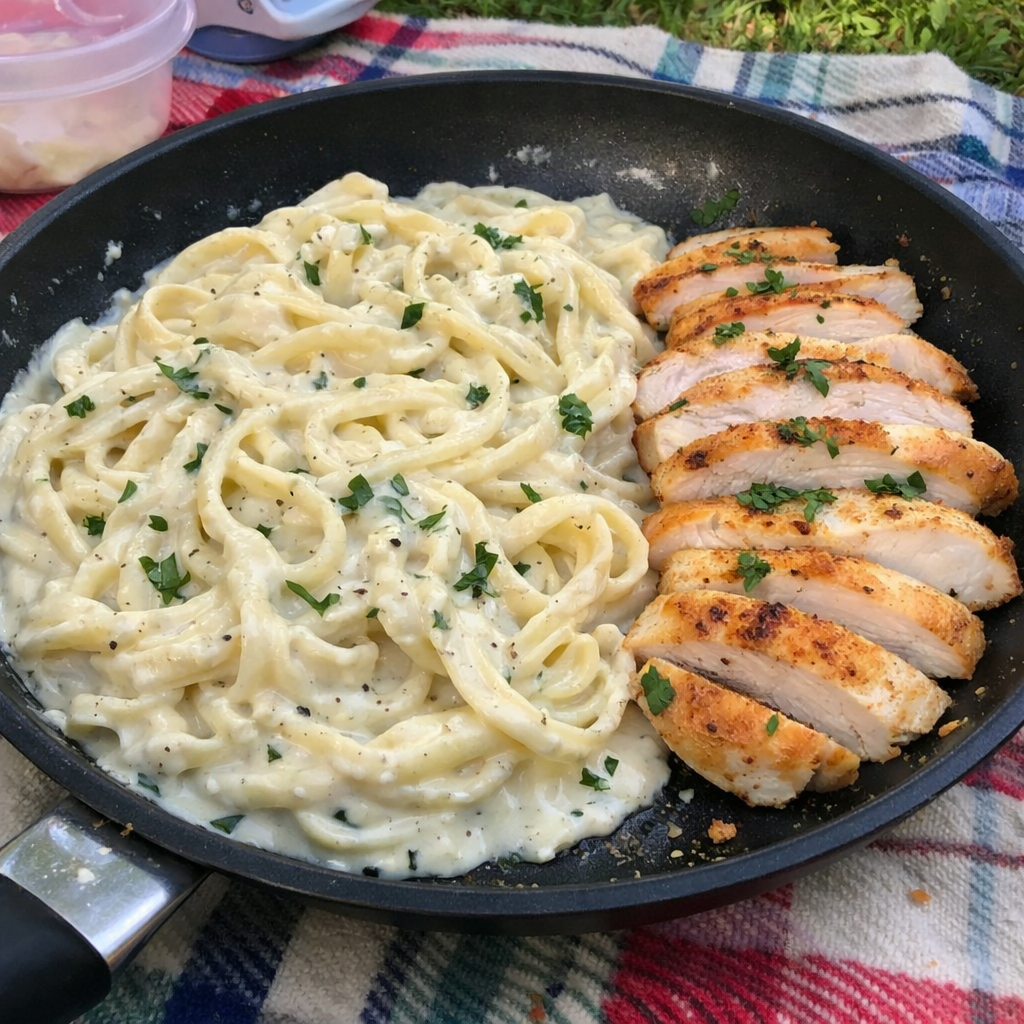
Heat 1 tbsp olive oil in a 12-inch skillet over medium heat, then lay in the chicken with tongs. Wash the knife and raw-chicken board with hot, soapy water. Cook the chicken 4 to 7 minutes until golden brown underneath, then turn it once. After it is turned, wash the tongs with hot, soapy water so they are clean before they touch the finished food.
Pasta Timing
Add the 12 oz of dry fettuccine made without egg to the boiling water as soon as the chicken is turned, and stir during the first minute so the strands do not stick together. Cook it, stirring now and then, 1 minute less than the package time. That shorter timing keeps it tender but still slightly firm in the center after it meets the hot sauce.
As the chicken finishes on the second side, keep cooking it 4 to 7 minutes more, using the shorter time for thinner pieces. The real doneness cue is an instant-read thermometer reading 165°F in the thickest part. Move the chicken to a clean cutting board and let it rest at least 5 minutes while the pasta and sauce finish.
Garlic Sauce
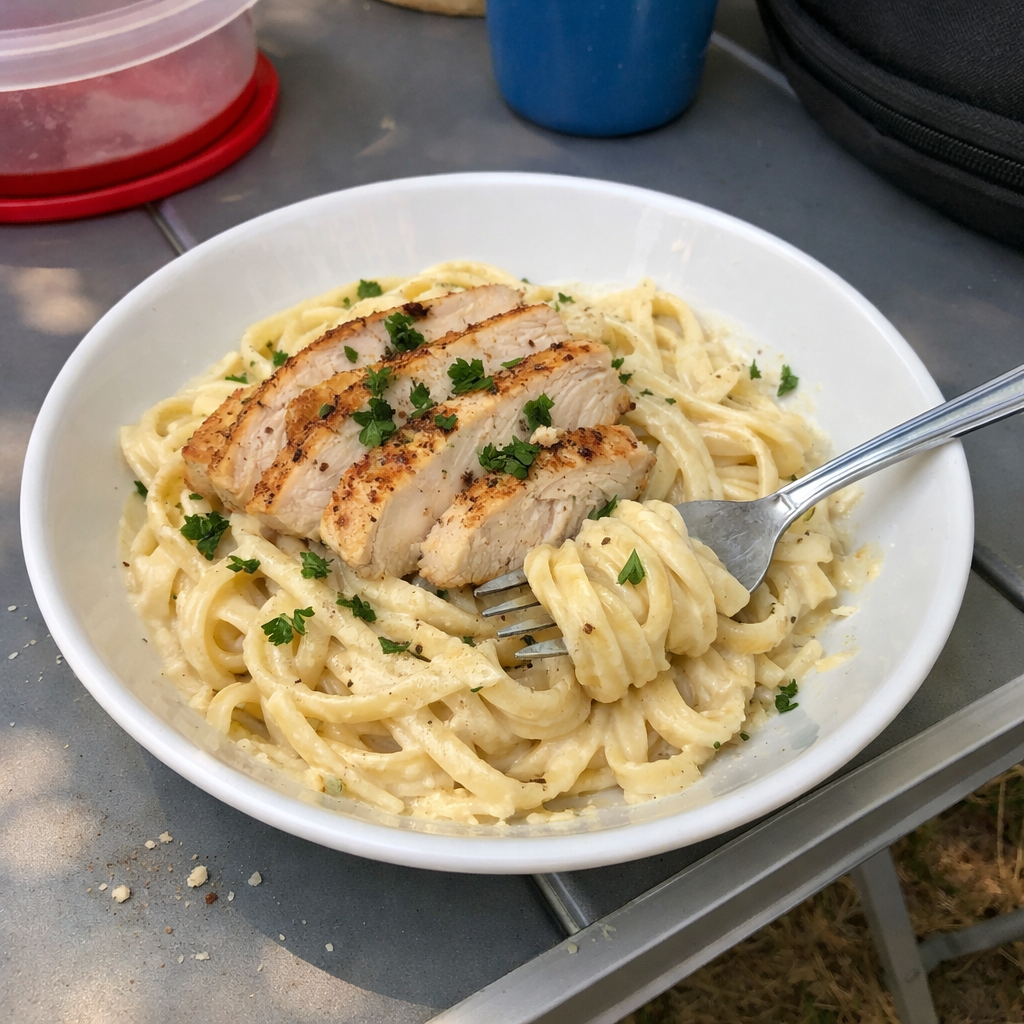
While the fettuccine is finishing, set the skillet over low heat and melt 1 tbsp unsalted butter in it. Add 4 minced garlic cloves and cook, stirring, 30 to 60 seconds, until fragrant but not browned. Then take the skillet off the heat. No salt goes into the sauce itself: salted pasta water, Parmesan, and cottage cheese already season it.
Set the skillet back over low heat, then pour in the blended cottage cheese mixture. Stir for 2 to 3 minutes until hot and steaming, but do not let it boil, or the sauce can turn grainy and separate. Add the drained fettuccine plus the remaining 1/4 tsp pepper, then toss with tongs, adding the last 1/2 cup pasta water a splash at a time until glossy.
Finish and Store
Take the skillet off the heat, then slice the chicken across the grain about 1/2 inch thick so the pieces are more tender. Lay the slices over the pasta, scatter 2 tbsp chopped fresh parsley on top, and serve right away. Serve it with steamed broccoli or a green salad on the side if you like.
Refrigerate leftovers in shallow covered containers within 2 hours of cooking. For reheating, add a splash of water, set the lid loosely on top, and microwave until hot, turning the container halfway through. Let it stand for a few minutes, then check that it reads 165°F in a few places; the sauce thickens in the fridge, so the extra water helps it loosen again.
Frequently Asked Questions
Can I use chicken thighs instead of chicken breasts?
Yes. Use 1 1/4 lb of boneless skinless chicken thighs, laid out flat in the skillet, and cook them the same way, turning once, until they read 165°F in the thickest part; go by the thermometer, since their timing can differ. Thighs stay juicier but have less protein, and the nutrition numbers are for breasts.
Can I use a different pasta shape instead of fettuccine?
Yes. Use 12 oz of another dry pasta made without egg, such as linguine, spaghetti, penne or rigatoni, and cook it 1 minute less than its own package time. Stir short shapes through the sauce with the spatula instead of tossing them with the tongs.
Can I make the sauce without a blender?
Yes, with a food processor or with an immersion blender in a tall, narrow container: blend the cottage cheese, Parmesan and 1/2 cup of hot pasta water until completely smooth, scraping down the sides as needed. Stirring or whisking by hand will not break down the curds, so the sauce would stay lumpy.
Can I halve the recipe to serve two?
Yes. Halve every ingredient: cook the 6 oz of fettuccine in 2 quarts of water with 1 1/4 tsp of the salt, and blend the cheeses with 1/4 cup of the 1/2 cup pasta water, saving the rest for the toss. The smaller batch sits lower in the blender jar, so scrape it down more often until completely smooth.
Can I make it a little spicy?
Yes. Add 1/4 to 1/2 tsp of crushed red pepper flakes to the melted butter with the garlic, so they warm with it and spread their heat through the sauce. Or leave them out of the skillet and pass them at the table, so each person adds their own.