In short
These protein bagels use no yeast and need no rising or boiling. Whisk flour, unflavored whey protein powder, baking powder and salt, then stir in plain nonfat Greek yogurt and knead for 1 to 2 minutes. Divide the dough into 4 pieces, shape rings, brush with thinned yogurt, add sesame seeds and bake 25 to 30 minutes at 375°F. Each large bagel has 24 g of protein and 308 calories. Cool for 15 minutes before slicing.
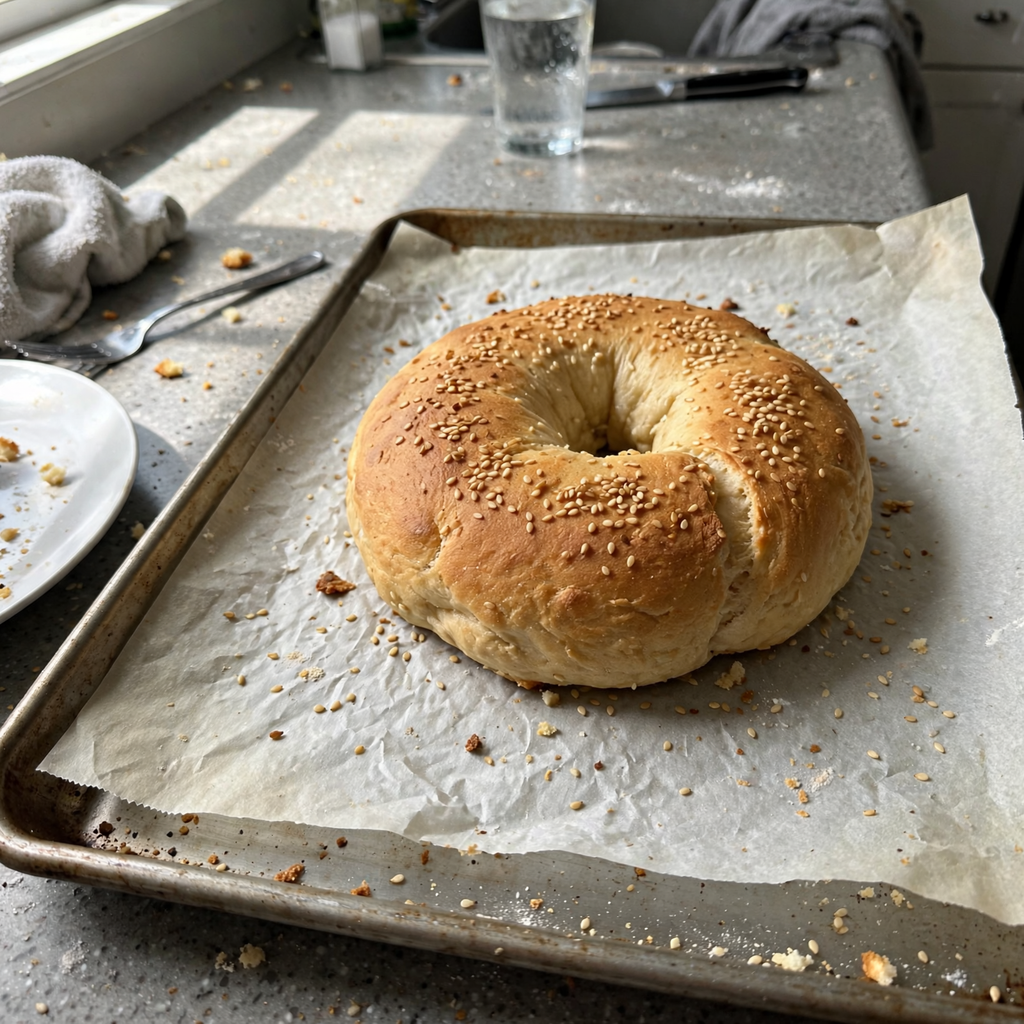
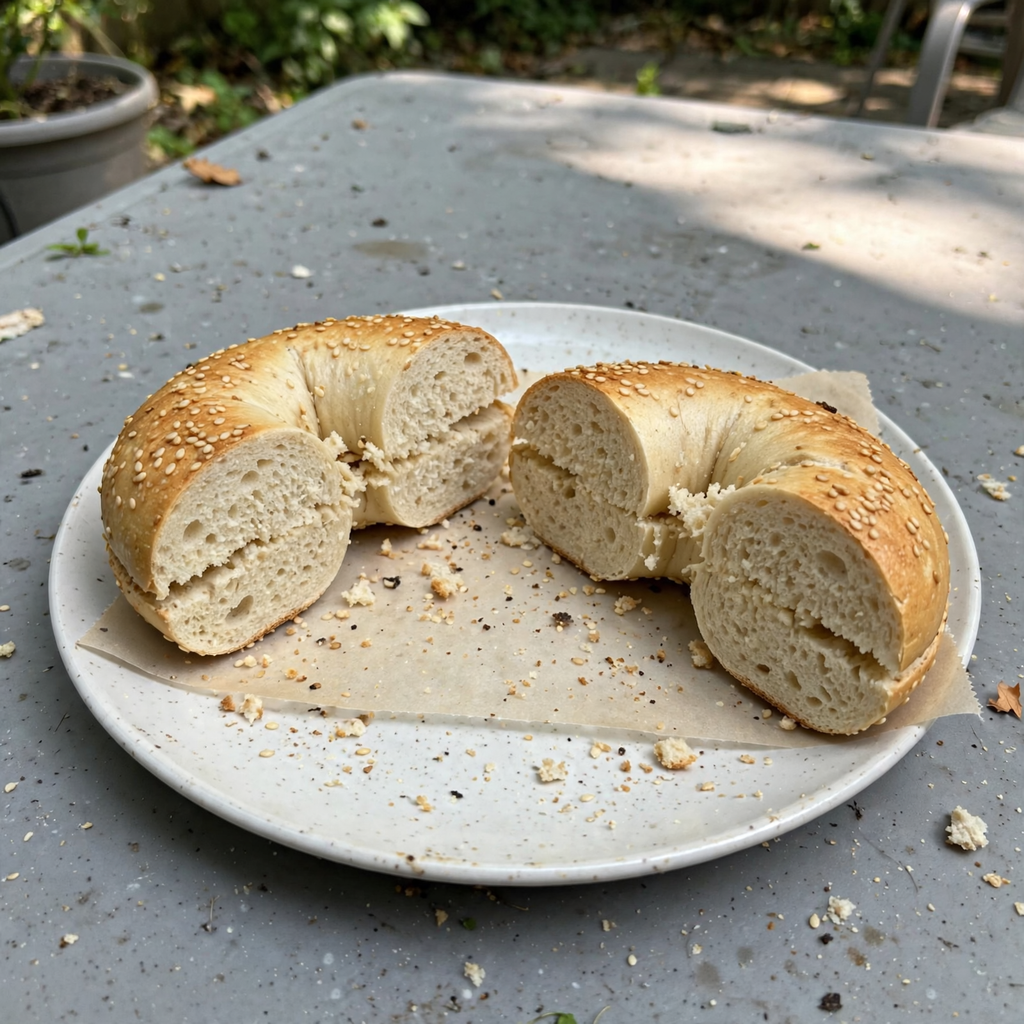
Protein Bagels are soft, tender, savory rings with a golden, sesame-topped crust, closer to a tender bread than a chewy boiled bagel. Each bagel has 24 g of protein, and the yeast-free Greek yogurt dough needs no rising or boiling. Total time is about 1 hour, including a 15-minute cool.
Choosing Yogurt and Whey Powder
Use 12 oz plain nonfat Greek yogurt, divided, and weigh it if you can, since thick yogurt packs unevenly into a cup. Greek yogurt is strained, so it makes a dough you can knead. Regular nonfat yogurt makes a wet dough and leaves each bagel with less protein than the 24 g listed. Greek yogurt protein pancakes use plain nonfat Greek yogurt too.
Choose unflavored whey powder, which keeps the bagels savory; vanilla or chocolate powders are usually sweetened. Measure 1/2 cup, or better, about 1 3/4 oz on a kitchen scale, since powders pack differently. Adding more whey gives a drier bagel, while a whey and casein blend goes in at the same amount and tends to stay softer.
Mixing and Kneading the Dough
Heat the oven to 375°F with a rack in the middle and line the rimmed baking sheet with parchment. Set aside 2 tbsp of the flour and 1 tbsp of the yogurt. Whisk the remaining flour with the whey, 2 1/2 tsp baking powder and 1/2 tsp salt, then stir in the rest of the yogurt. Protein waffles also get the whey whisked into the flour while everything is dry.
Stir with a rubber spatula until a shaggy dough forms and no dry powder is left at the bottom of the bowl. Knead on the 2 tbsp flour for 1 to 2 minutes, until smooth, soft and slightly tacky. Longer kneading makes tough bagels. If it crumbles, knead in water, 1 tsp at a time.
Dividing and Shaping the Rings
Divide the dough into 4 equal pieces, a little over 5 oz each, and weigh them so the bagels are the same size and finish baking together. Divide into 4 and no more to keep 24 g of protein in each bagel. Roll each piece into a rope 8 to 9 inches long.
Overlap the ends and pinch them together firmly, or the seam can open as the bagel rises. Make the hole about 1 1/2 inches across, wider than looks right, because the dough puffs into it. Set the rings at least 2 inches apart. Stir 1 tbsp yogurt with 1 tsp water, brush it over the top and sides of each bagel, then sprinkle 1 tbsp sesame seeds over the tops and press them on gently.
Baking Protein Bagels Until Done
Bake on the middle rack for 25 to 30 minutes, until the tops are an even golden brown, the bottoms are browned and the bagels feel firm. Go by color and temperature together. Push the instant-read thermometer in from the side to the center of the thickest part of one bagel; it should read at least 200°F.
If it reads lower, or the tops still look pale, bake 3 to 5 minutes more and check again. The 200°F mark is about doneness, not a food-safety line. For a darker top, slide the parchment out, then broil the baked bagels on the bare sheet for 1 to 2 minutes, watching closely because seeds burn fast.
Storing and Reheating Protein Bagels
Let the bagels cool on the baking sheet for 15 minutes before slicing with a serrated knife; slicing straight from the oven can leave the crumb gummy. Put leftovers in a covered container and refrigerate within 2 hours of baking. Eat them within 3 to 4 days. Any toppings are extra and are not in the numbers.
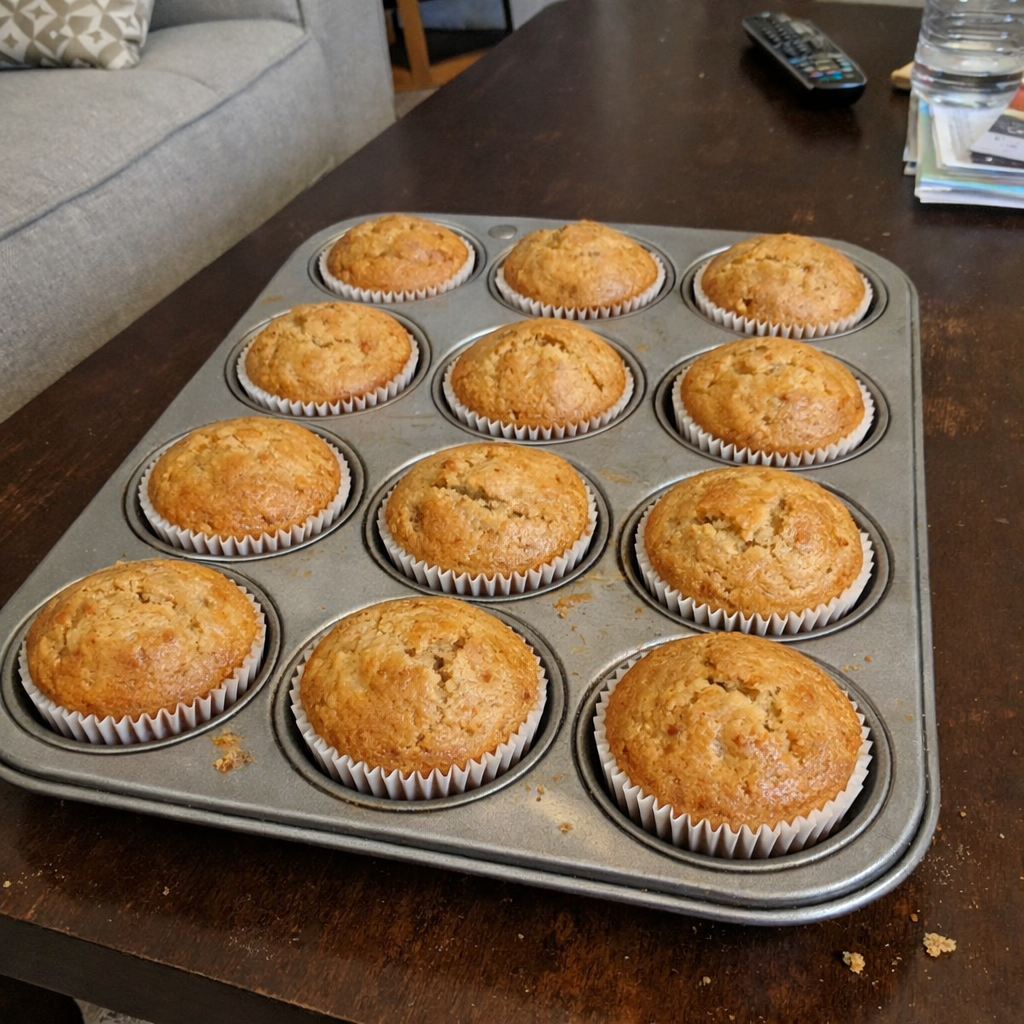
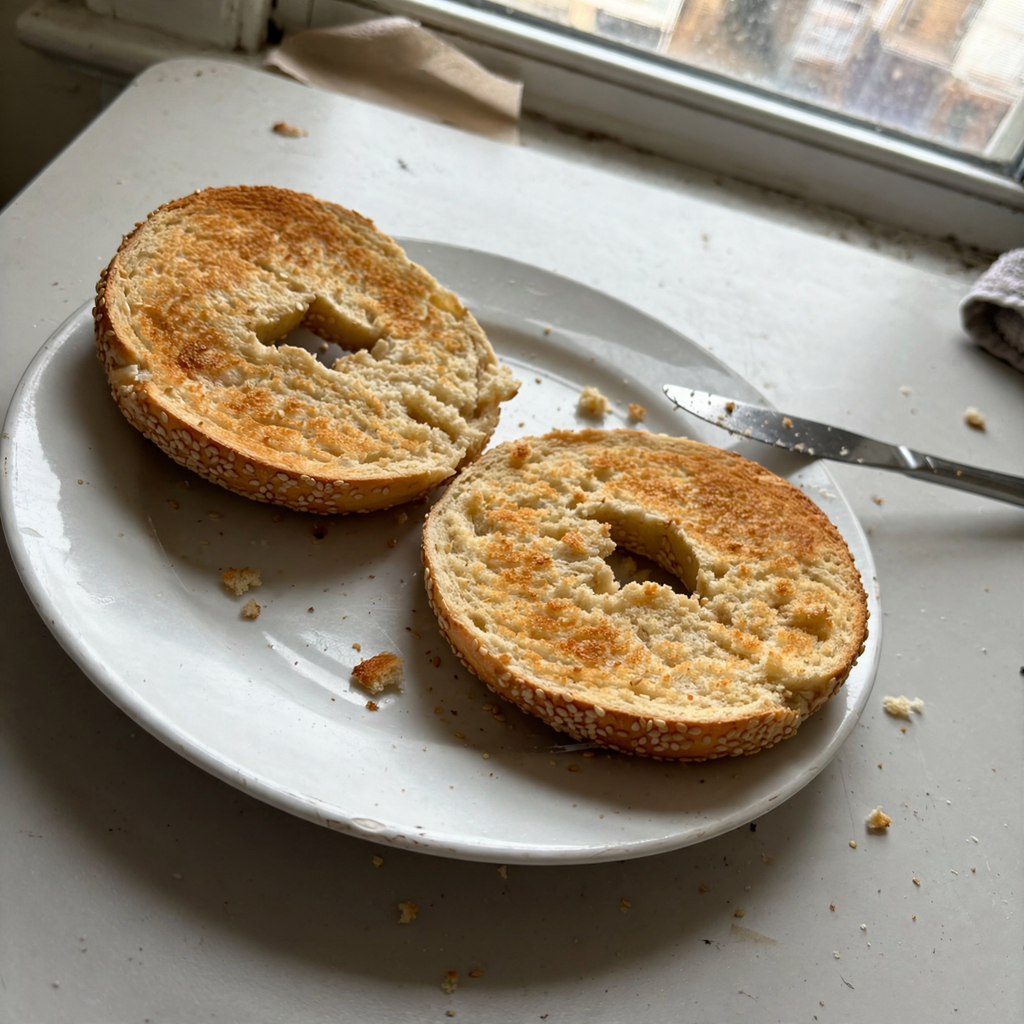
To freeze, slice the bagels, wrap each one and seal them in a freezer bag; they keep their best quality for 3 to 4 months, as banana protein muffins do. Thaw in the refrigerator, or toast straight from frozen, which takes longer. Toast the cut halves until hot and browned; a reheated bagel should read at least 165°F in the thickest part.
Frequently Asked Questions
Can I make them without protein powder?
Yes. Leave out the whey and use 2 1/4 cups flour in all and 3 tsp baking powder, keeping the yogurt, salt and seeds as written. Shape and bake them the same way. Each bagel then has about 8 g less protein and about 320 calories.
Can I use self-rising flour?
Yes. Use 1 3/4 cups self-rising flour and leave out the baking powder and salt, because the flour already holds both. Each bagel has about 1/2 g less protein.
Can I use cottage cheese instead of Greek yogurt?
Yes. Blend 12 oz of 2% cottage cheese for about 1 minute, until smooth, and use it everywhere the yogurt goes. The dough can be softer, so work in more flour 1 tbsp at a time if it sticks to your hands. Each bagel has about 1/2 g more protein and about 20 more calories.
Can I make smaller bagels?
Yes. Divide the dough into 6 pieces of about 3 1/2 oz, roll them into 7-inch ropes and bake for 20 to 25 minutes, with the same color check and at least 200°F. Each bagel then has about 8 g less protein and about 205 calories.
Can I use whole wheat flour?
Yes, for half of it: use 3/4 cup plus 2 tbsp each of all-purpose and whole wheat flour. Whole wheat soaks up more liquid, so the dough is stiffer and the bagels a little denser with a nuttier taste; knead in water 1 tsp at a time if it crumbles. Each bagel has about 1 g more protein.